Yom HaShoah 2026: The Dangerous Rise of AI-Generated Antisemitism and Holocaust Denial

By Dr. Katrina Lantos Swett and Yigal Carmon

Each year, Yom HaShoah – Holocaust and Heroism Remembrance Day – commemorates the 1943 Warsaw Ghetto Uprising. As the last living witnesses to this history rapidly disappear, this day's importance only increases: Last year there were some 220,000 Holocaust survivors worldwide; today there are about 196,600.

This year's Yom HaShoah comes amid an unprecedented rise in antisemitism, as the memory of the Holocaust is under attack.

An existing and deeply distressing trend has increased over the past year: Prominent neo-Nazi and antisemitic influencers continue to visit former Nazi concentration camps, and other memorials to Holocaust tragedy and remembrance, to desecrate and mock them, sharing videos and selfies of this activity. Several of these memorial sites have reported vandalism, verbal abuse, intimidation, and disruptive behavior, from both far-right extremists and jihadi-linked individuals – to the point where guides, reception, and administrative staff at these sites have felt so threatened that emergency panic buttons are being installed.

Oliver von Wrochem, director of the Neuengamme concentration camp memorial near Hamburg and spokesman for the association of these memorials across Germany, underlined what he called a shocking state of affairs, noting, "Across Germany, graffiti, Hitler salutes and other attacks at concentration camp memorial sites have increased massively."

Last summer, American neo-Nazi content creator "Hermes" – real name Pijus Zemaitis – embarked on a European trip, stopping at Auschwitz, the Anne Frank House, and the infamous Wewelsburg Castle used by Himmler's SS, and sharing videos and photos of himself mocking Holocaust victims and celebrating the Nazi regime.

A few years earlier, in 2022, Jon Minadeo, the infamous neo-Nazi livestreamer and leader of the Goyim Defense League, and his sidekick Robert Wilson, aka Aryan Bacon, visited Auschwitz to unfurl antisemitic banners ridiculing the victims and Holocaust history. The footage of their activity was then shared extensively online, by both extremist and non-extremist accounts, to the amusement of many likeminded individuals – and to the horror of others.

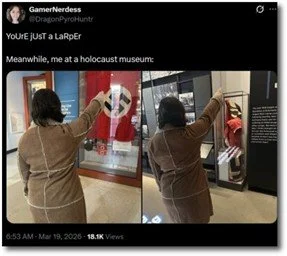
Just last month, on March 19, a neo-Nazi user on Twitter shared two photos of herself giving a Roman salute at an unidentified Holocaust museum, writing: "Meanwhile, me at a holocaust museum."

As noted, this threat is not only from neo-Nazis; Islamist and jihadi-linked individuals target these sites as well. Recently, a 20-year-old Syrian man was convicted in Germany for his stabbing spree at the Memorial to the Murdered Jews of Europe, and sentenced to 13 years in prison. He had carried out the attack on behalf of ISIS.

But even as these outrageous attacks take place on memorials and places of historical significance for the Holocaust, an even more disturbing global trend has emerged – namely, the increasing use of artificial intelligence (AI) in the promulgation of antisemitism in general and Holocaust denial specifically. This is only one of the issues covered in the research of the MEMRI-Lantos Archives on Antisemitism and Holocaust Denial Project – the largest archives in the world of antisemitic content from the past quarter century in the Middle East and beyond.

This past year, the project's research, monitoring, and translations have been devoted to how AI is being used to generate, manipulate, and disseminate distortion, ridicule, and denial of the Holocaust and its victims and to glorifying its perpetrators. It is circulated at unprecedented scale and speed, for propaganda, recruitment, and radicalization – particularly among younger audiences who lack historical knowledge.

Just as it has worked to protect its Holocaust memorials and historical sites, Germany has emerged as a leader in the fight against AI-powered antisemitism and Holocaust denial.

As one of the earliest adopters of the IHRA definition of antisemitism, Germany began supporting AI-based detection efforts, such as the Decoding Antisemitism project, in 2024. In May that year, Germany's Federal Office for the Protection of the Constitution underlined the growing threat of AI-generated antisemitic imagery.

For International Holocaust Remembrance Day this past January 27 – the day aimed at confronting denial and distortion and safeguarding historical truth – a coalition of German Holocaust memorials, documentation centers, and historical research institutions, including memorials at former Nazi concentration camps, released an open letter. The letter sounded the alarm that the very memory that these institutions seek to protect is being eroded in real time.

This AI-generated falsified Holocaust content, they wrote, "distorts history by trivializing and kitschification," and is designed to dilute historical facts, switch the roles of victim and perpetrator, and spread revisionist narratives. Adding that this "undermines the credibility of memorial sites, archives, museums, and research institutions," they went on to call for decisive action to label, restrict, and remove this content. The statement went virtually unnoticed outside of Germany – but it should be read and widely disseminated.

Germany's State Minister for Culture and Media, Wolfram Weimer, framed the fight against this use of AI in unequivocally moral terms, saying that he supported the measures called for in the letter and adding: "This is a matter of respect for the millions of people who were killed and persecuted under the Nazi regime of terror."

Yom HaShoah recalls the darkness of the Holocaust, but also the courage and determination of the Jews of the Warsaw Ghetto who rose up to resist their Nazi oppressors. In this era of ever-growing antisemitism, we must summon similar courage and will to push back against the forces that seek to distort and deny the Holocaust. Germany is in a unique position to lead the charge in terms of AI-generated Holocaust denial. With its population of over 70 million Internet users, and significant leverage over an EU population of over 450 million, Germany has the influence and capability to pressure AI companies to take the necessary measures to prevent this dangerous development from getting further out of control. In a world where antisemitism is becoming increasingly normalized and accepted, we cannot afford to let the power – and the deception – of AI supercharge the dangerous trajectory of rising hatred for the Jewish people.  

Dr. Katrina Lantos Swett is President of the Lantos Foundation for Human Rights and Justice. Yigal Carmon is Founder and President of MEMRI.

Statement: The Historic Results of the Hungarian Election 

Lantos Foundation President Dr. Katrina Lantos Swett released the following statement today:

Victor Orbán served as Prime Minister of Hungary for a total of 20 years over the past three decades (1998-2002, 2010-2026), and for the last 16 years straight. Many observers wondered whether Hungary's democracy could survive not only such a long and dominant tenure but also the model of “illiberal democracy” that Mr. Orbán introduced – a model that some have classified not as democratic but rather as “hybrid authoritarian.” Sunday's election results and the victory of Péter Magyar and the Tisza party provide a resounding answer to this question: Democracy is yet alive in Hungary.

As I reflect on yesterday’s election results, I believe my late father Congressman Tom Lantos would be cheering for Hungary and for the opportunity it now has to return fully to the path of democracy, which he and many others worked tirelessly to set it on after the Iron Curtain fell. Tom Lantos was one of the most prominent Hungarian-born Americans to serve in the U.S. Congress, and the only Holocaust survivor to do so. His unique experience as the sole American representative to have personally lived under both Nazi fascism and Soviet communism fueled his passionate patriotism for the United States of America. He appreciated better than most what a precious boon our remarkable and resilient democracy is. He also believed that his native country, for which he always retained a deep love, belonged in the community of democratic nations. There has been cause for concern at the direction Hungary has taken in recent years – both turning eastward toward Russia and China and in terms of changes to its constitutional system – but there is hope that today marks a turn in a better direction.

The victorious Péter Magyar, who is expected to become prime minister, now has an opportunity to course correct. To his credit, Mr. Orbán congratulated Mr. Magyar less than three hours after the polls closed, and he was honest with his supporters in saying, “The election result is painful for us but clear.” 

This is as it should be. Free elections are one of the most important hallmarks of a true democracy, as is the peaceful transfer of power between political adversaries. Hungary appears to have succeeded on both counts, which bodes well for the future of its democracy. Not only Hungarians, but all lovers of freedom can breathe a sigh of relief. Now comes the hard work of strengthening Hungary's democratic institutions that have faced challenges in recent years. 

We must all wait to see what the future holds for Hungary. Mr. Magyar’s Tisza party now enjoys a super-majority in the Parliament. It has been described as center-right and may well continue some of the Fidesz policies instituted under Orbán. However, there is hope that it will also work to roll back some of the political changes that have undermined electoral competition and diminished the independence of the judiciary. Much remains uncertain, but what we can all celebrate today is that the future of Hungary seems to be in the hands of the Hungarian people, where it rightfully belongs.

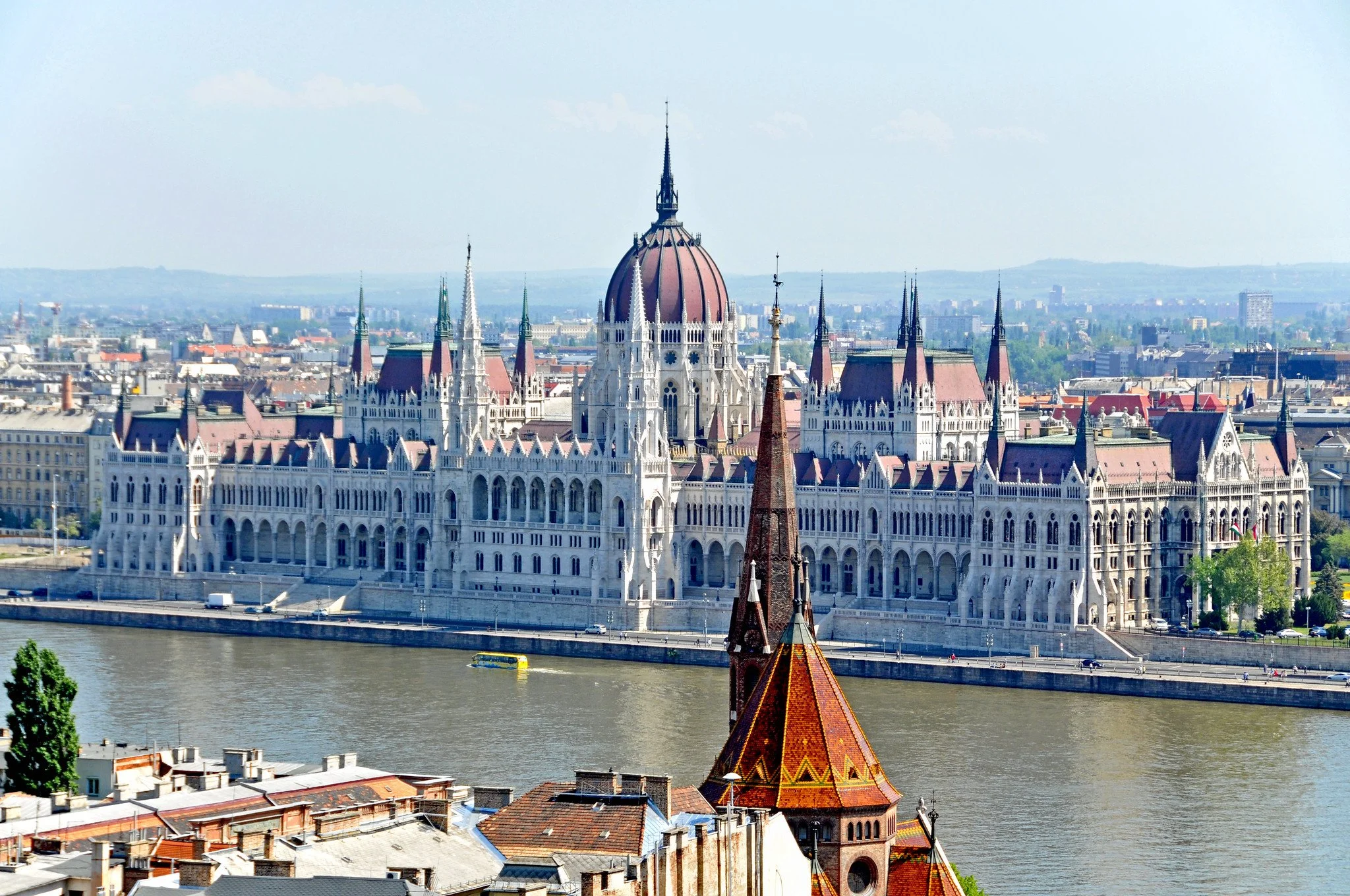
The Hungarian Parliament in Budapest (Credit: Dennis Jarvis - Creative Commons license)

Joint statement calling for the release of Rwandan opposition leader Victoire Ingabire

The following statement has been issued by the Lantos Foundation for Human Rights and Justice, Human Rights Foundation, and Freedom Now.

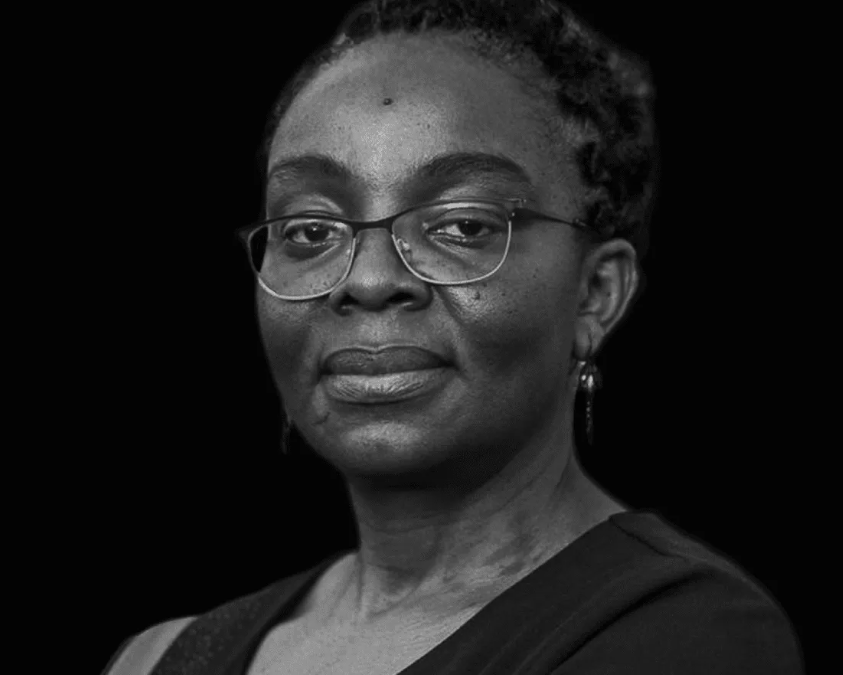
A tireless opposition figure, Victoire Ingabire Umuhoza has faced heavy repression at the hands of Rwandan President Paul Kagame’s regime for years. On Friday, March 27, 2026, the Rwandan Supreme Court rejected Ingabire’s challenge to the constitutionality of her June 2025 arrest and ongoing detention. This decision clears the way for Rwandan prosecutors to proceed with Ingabire’s trial, in which they seek a life sentence — a trial that will almost surely be unjust.

Ingabire was previously arrested in 2010, when she returned to Rwanda after leading an opposition coalition in exile. She was imprisoned for nearly eight years on charges of genocide denial and conspiring against the country through terrorism and war, though human rights experts condemned the trial as politically motivated. She won her case before the African Court on Human and Peoples’ Rights and received a presidential pardon in 2018. However, she was not allowed to register her party, was barred from running in Rwanda’s 2024 presidential election, and was repeatedly denied permission to travel outside of Rwanda to visit her family. 

Her re-arrest on June 19, 2025 took place only hours after she had fulfilled her civic duty as a witness in a trial concerning nine defendants, including eight members of her political party, Development and Liberty for All (DALFA-Umurinzi), and an independent journalist. Given Rwanda’s lack of an independent judiciary, it is highly unlikely, bordering on impossible, for Ingabire to receive a free and fair trial in the Rwandan courts. Her rights to due process have been violated from the outset of this ordeal, when agents from the Rwandan Investigation Bureau arrested her without presenting an arrest warrant. 

The Supreme Court’s decision in Ingabire’s case is part of a pattern that sees Rwanda’s courts serving the regime’s political interests rather than justice. The trials of other dissidents and activists have likewise been rife with due process violations and have rarely ended in fair verdicts. A vocal critic of the regime like Victoire Ingabire cannot hope for justice in such a system. 

In this harsh context, the international community must ensure that the Rwandan regime does not act with impunity. International legal monitors, in particular, must pay close attention to Ingabire’s trial as it progresses. Greater scrutiny will make it more difficult for the Rwandan regime to use the judicial system as cover to target and silence those who dare to speak out.  

We call on Rwanda to immediately and unconditionally release Victoire Ingabire and drop the charges against her. Until then, we urge the international community to monitor her trial and use its diplomatic leverage to hold Rwanda accountable to its human rights obligations. 

Background

Ingabire has been joined to the trial of the aforementioned nine defendants, who have been detained since 2021 on charges of forming a criminal organization and spreading false information merely for attending an online training on nonviolent resistance. In 2024, the UN Working Group on Arbitrary Detention issued a decision condemning the imprisonment of the nine detainees as unlawful and calling for their release.

The prosecution first investigated and interrogated Ingabire in 2021 in relation to these events and concluded that there were no grounds for a case against her. On June 17, 2025, the High Court ordered the prosecution to conduct a second investigation into Ingabire’s alleged role in the training, which ultimately led to her arrest. The High Court’s order for a second investigation violates the principles of prosecutorial independence and the presumption of innocence, both protected by the Rwandan Constitution. Furthermore, the judges who ordered the second investigation will now decide the outcome of her case — a clear violation of judicial impartiality. 

The trumped-up charges against Ingabire include allegedly establishing or joining a criminal organization, inciting public unrest, undermining the authority of the government, spreading false information to discredit Rwanda abroad, conspiring to incite public disorder, and conspiring to organize a demonstration. For these, the prosecution is requesting a life sentence. 

The European Parliament has called for her release, and UN Special Rapporteurs have expressed concern. In November 2025, the Human Rights Foundation, Freedom Now, and the Lantos Foundation for Human Rights and Justice submitted an individual complaint to the UN Working Group on Arbitrary Detention, asking it to declare her detention arbitrary and in violation of international law.

Lantos Foundation and Human Rights Foundation Announce New Strategic Partnership with Focus on Government Engagement and Freedom of Belief

Today the Lantos Foundation for Human Rights and Justice and the Human Rights Foundation (HRF) and announced a new strategic partnership, which will include key areas of joint work and enhanced collaboration. The two organizations have a history of impactful cooperation, such as the establishment of the RIGHT Coalition and the Empty Box campaign. This partnership will formalize the collaboration.

HRF is a nonpartisan nonprofit organization that promotes and protects human rights globally, with a focus on closed societies. For more than two decades, HRF has worked to elevate the voices of frontline activists and has supported efforts to advance freedom and democracy around the world through its programs, campaigns, and the annual Oslo Freedom Forum.

“The Lantos Foundation and HRF share so much in common in terms of our mission and focus, and I have always had tremendous admiration for HRF’s bold and creative approach to human rights advocacy,” said Lantos Foundation President Dr. Katrina Lantos Swett. “In so many ways, our organizations have complementary expertise and capacities. We’ve seen the benefits of joining forces in the past, and it is the logical next step to turn our regular collaboration into a formal partnership where we can better plan and execute joint initiatives. I’m very excited about everything our teams will achieve together.”

“The Lantos Foundation has long been a principled and effective voice for human rights, particularly in its engagement with democratic governments and its leadership on freedom of religion or belief,” said HRF President Céline Assaf-Boustani. “By formalizing our partnership, we are bringing together two organizations with complementary strengths — HRF’s focus on authoritarian regimes and the Lantos Foundation’s deep experience in policy and advocacy. Together, we can amplify the voices of frontline activists and push democratic governments to take stronger action in defense of fundamental freedoms.”

The strategic partnership will initially focus on two primary areas of work, with room to expand the collaboration in the future. These will include:

Strengthening Global Government Advocacy: Since its establishment, the Lantos Foundation has made government advocacy a primary focus of its work. With this partnership, HRF and Lantos will combine efforts on government advocacy in Washington and beyond to extend the impact of HRF’s programs and campaigns and create more robust engagement with democratic governments around the world. These joint government advocacy efforts will also include the creation of a Washington segment of HRF’s Freedom Fellows mentorship program and will mark an exciting progression from the Lantos Congressional Fellows program. The new Washington segment will provide frontline human rights activists with invaluable training, experience, and connections to help strengthen their own government advocacy efforts, in the US and beyond. 

Protecting Freedom of Religion or Belief in Authoritarian Regimes: Through a newly established joint program, HRF and Lantos will shine a spotlight on religious freedom violations taking place under authoritarian regimes throughout the world. The Lantos Foundation’s longtime engagement on religious freedom issues and HRF’s unique research and on-the-ground understanding of authoritarian countries will combine to create a program that seeks to protect and advance this sometimes overlooked human right. The program will elevate freedom of religion or belief in HRF’s work and research, including at the Oslo Freedom Forum, and seek to raise the profile of religious freedom issues within the broader human rights and democracy ecosystem. In keeping with the Lantos Foundation’s past advocacy, it will span the full range of religious communities, faith traditions, and belief systems, recognizing that conscience rights must also guarantee the right to freedom from any particular belief in theocratic societies.   

The new strategic partnership between HRF and the Lantos Foundation will be strengthened by the merging of key staff resources, with two senior Lantos Foundation employees taking on dual roles at HRF. Executive Director Chelsea Hedquist will also serve as the Head of Communications Strategy at HRF, while Director of Policy and Partnerships Candace Bryan Abbey will assume the role of Head of Global Government Engagement. The dual reporting structure will allow for streamlined integration of the key programs and initiatives of the partnership.


Statement: Finding Hope in the Aftermath of the Bondi Beach Massacre

Lantos Foundation President Dr. Katrina Lantos Swett released this statement following the tragic Bondi Beach massacre on December 14, 2025.

As young teenagers, my mother and father, Tom and Annette Lantos, became hated and hunted in their native Hungary, simply for the “crime” of being Jewish. It was a nightmare. Usually, we speak of awakening from a nightmare with the hope that life will resume a measure of normalcy and equilibrium. As I shared the news of the Bondi Beach massacre in Australia with my now 94-year-old Holocaust survivor mother, the thought came to me that for Jews around the world, we are instead awakening to a nightmare. Once again, Jews are being hunted and murdered simply because they are Jewish. Bondi Beach is the latest, but I fear not the last, such tragedy that the world will witness.

Many have already commented on the supreme irony of this attack occurring on the first night of Hanukkah – the Jewish holiday that celebrates hope, courage, determination and, above all, the light that miraculously was not extinguished.

The same day as the terrible events at Bondi Beach, Rachel Goldberg-Polin, the mother of murdered October 7 hostage Hersh Goldberg-Polin and one of our 2025 Lantos Prize Laureates, published a beautiful essay about recently released footage of her son and five other hostages celebrating Hanukkah during their captivity. Her words are incredibly moving:

“Seeing these young, vibrant, and luminous Jews keeping alive their over 2,000-year-old tradition of lighting Hanukkah candles, even when in the bowels of hell on earth, you cannot help but feel something…In these dark times, it is a flicker of light. The flame is whispering something…It is hope. Hope! It’s not a suggestion, or advice. It is a command.”  

So, I ask myself, where do we find hope at such a time as this, with violent antisemitism surging throughout the world? One place that I find hope is in the powerful video of a brave Muslim fruit vendor, Ahmed Al Ahmed, who courageously charged forward to tackle one of the Bondi murderers, no doubt saving many lives. Amid the terror and darkness, this man’s humanity and bravery is more than a silver lining. It is a reminder and challenge to each of us to stand in solidarity with the persecuted and hated, whoever and wherever they may be. His willingness to step up at the moment of testing brings to mind the words of my late father Tom Lantos: “The veneer of civilization is paper thin. We are its guardians, and we can never rest.”

Each of us will face a moment of testing, and we will be forced to choose whether to do our part to keep the light of hope and humanity burning. In ancient Israel 2,000 years ago, at Hanukkah, the light did not go out. Nor will our light go out. We will never rest in our struggle to rid the world of the evils of antisemitism, prejudice, and hatred – nor will we rest in the long journey towards human rights, justice, and freedom for all.


Lantos Foundation Joins with HRF and Freedom Now to Defend Rwandan Opposition Leader Victoire Ingabire Before the UN

NEW YORK (Nov. 25, 2025) — The Lantos Foundation for Human Rights & Justice joined with the Human Rights Foundation (HRF) and Freedom Now to submit a joint complaint to the UN Working Group on Arbitrary Detention (WGAD) on behalf of detained Rwandan opposition leader Victoire Ingabire.

On June 19, 2025, agents from the Rwandan Investigation Bureau arrested Ingabire in her home in Kigali, Rwanda, without presenting an arrest warrant. 

Earlier that day, Ingabire had appeared before the Rwandan High Court as a witness in the trial concerning eight members of her party, Development and Liberty for All (DALFA-Umurinzi), and an independent journalist. The nine defendants have been detained since 2021 on charges of forming a criminal organization and spreading false information for attending an online training on nonviolent resistance. After Ingabire’s testimony, in total disregard of her presumption of innocence and a 2024 WGAD decision condemning the imprisonment of the other nine detainees, the High Court ordered an investigation into Ingabire’s alleged role in the training. 

The prosecution is requesting a life sentence for Ingabire for allegedly establishing or joining a criminal organization, inciting public unrest, undermining the authority of the government, spreading false information to discredit Rwanda abroad, conspiring to incite public disorder, and conspiring to organize a demonstration.

“Judges have treated Ingabire as though she were guilty from the onset of her pretrial detention. There is little indication that this will change, as the judges who ordered the investigation will be the ones presiding over her trial,” said HRF Senior Legal Associate Venla Stang. “We are determined to ensure that her appalling treatment by the Rwandan judiciary is exposed and condemned globally.”

A tireless opposition figure, Ingabire has been subjected to heavy repression at the hands of Paul Kagame’s regime for years. In 2010, she was arrested upon her return to Rwanda after leading an opposition coalition in exile. She was imprisoned for nearly eight years for genocide denial and conspiring against the country through terrorism and war, charges which human rights experts condemned as politically motivated. In 2018, she received a presidential pardon after winning her case before the African Court on Human and Peoples’ Rights. Despite her release, Ingabire has not been allowed to register her party and was barred from running in Rwanda’s 2024 presidential elections.

“Kagame has repeatedly threatened to jail my mother again, starting just four days after she walked free from her first eight-year imprisonment. Those threats have now become a reality, and she is back in prison, not because she has done anything wrong, but because he has decided she must be silenced,” Ingabire’s son, Rémy Amahirwa, said.

Ingabire’s latest arrest marks yet another episode in the Rwandan regime’s systematic persecution of political opponents. HRF calls on the WGAD to investigate Ingabire’s case, determine that her detention is arbitrary, and demand her immediate release.

Read more from HRF.

Diane Foley and Rachel Goldberg-Polin, Courageous Mothers and Hostage Advocates, Honored with 2025 Lantos Human Rights Prize

Media contact:

Chelsea Hedquist

press@lantosfoundation.org

From left: Katrina Lantos Swett, Diane Foley, Rachel Goldberg-Polin, Annette Lantos Tillemann-Dick

Credit: Lantos Foundation/Babette Rittmeyer

Washington, DC, November 14, 2025 – The Lantos Foundation for Human Rights and Justice has awarded the 2025 Lantos Human Rights Prize, its highest honor, to a pair of courageous mothers who became advocates on behalf of hostages and their families, after they each experienced the unimaginable loss of their own sons. Diane Foley is the mother of journalist James Foley, who was killed by ISIS in 2014. She founded the James W. Foley Legacy Foundation to advocate on behalf of hostages, promote journalist safety, and inspire moral courage. Rachel Goldberg-Polin is the mother of Hersh Goldberg-Polin, a civilian who was attending a music festival in Israel when he was taken hostage by Hamas on October 7, 2023. She became one of the most public faces of the fight to bring the hostages home. These remarkable women received the award at a ceremony held this week in Washington, DC, attended by Members of Congress, representatives from the diplomatic community, human rights activists, policy makers, and more.

The ceremony marked the seventeenth year the Lantos Foundation has awarded the Lantos Human Rights Prize. It is given annually to a human rights champion, or champions, to help draw attention to human rights violations around the world and to encourage governments to make human rights a priority on equal footing with other policy decisions.

This week’s ceremony honored the Prize recipients for their courageous response to horrific personal tragedy, channeling love and grief into action and advocacy. It featured a special musical performance by three-time Academy Award®-nominated composer, singer-songwriter, producer and social activist J. Ralph, along with the singer-songwriter and musician Leah Siegel. They performed a haunting rendition of the song “The Empty Chair,” which J. Ralph co-wrote with Sting for the documentary Jim: The James Foley Story.

Ms. Foley’s work over more than a decade has led to critical improvements to the United States’ approach to hostage response and recovery. This was recognized by Dustin Stewart, Deputy Special Presidential Envoy for Hostage Affairs (SPEHA), who said in his remarks, “Simply put, without Diane, we would not be here today,” referring to the SPEHA office and the other two pillars of the United States’ “hostage enterprise” system that Ms. Foley’s advocacy helped establish.

In her acceptance remarks, Ms. Foley noted that her son Jim and the late Congressman Tom Lantos both offer powerful examples of deep moral courage, which is “the quiet steady force within, which calls each of us to choose compassion when anger tempts us; to choose to speak out when it’s easier to be silent; and to hold onto hope when everything around us seeks to extinguish it.” She continued, “Moral courage disturbs us, challenges us, and ultimately defines us. Each of us has a chance right now to make a choice that brings hope, protection, and freedom to others. The work of the Lantos Foundation and the Foley Foundation is only possible because good people like you refuse to look away.”

In many ways, Ms. Foley’s efforts over the past decade have paved a path for Ms. Goldberg-Polin, who for more than two years has been a leading voice among the families of hostages held in Gaza. Her tireless advocacy, which continued even after the murder of her own beloved son, ensured that the human rights and humanitarian imperative of the hostages’ release has never been lost or forgotten. Her advocacy helped, in no small part, to secure the safe return of 168 hostages.  

In accepting the Lantos Human Rights Prize, Ms. Goldberg-Polin shared that she has admired the late Congressman Tom Lantos since she lived in his congressional district in California, when her son Hersh was just a newborn baby.  She quoted a favorite line from Mr. Lantos: “Mine is a miniscule contribution but I am part of the forces of good in this world.”

“I thought yes, that is what I want to be,” said Ms. Goldberg-Polin. “I aspire to emulate Representative Lantos. I want to take my loss, pain, and grief and choose to walk with it down the boulevard of light and life.” She continued, “May we see the return of all of our cherished hostages immediately. May we each make our miniscule contributions to a higher, hallowed purpose, and may we each merit to have the wisdom to choose to be part of the forces of good in this world.”

Dr. Katrina Lantos Swett, President of the Lantos Foundation, praised both Prize recipients for their incredible impact, saying to Ms. Foley, “You have forever changed the landscape of hope for hostages and their families. You are a hero to the taken and the forgotten.” She credited Ms. Goldberg-Polin’s charismatic and unyielding advocacy for breaking through to a disinterested and uncaring world, saying, “With your rare eloquence and your raw and powerful dignity, you made the fate of the hostages real and very personal to literally millions of people around the world.”

Dr. Lantos Swett welcomed Ms. Foley and Ms. Goldberg-Polin into the distinguished ranks of past Lantos Prize laureates, including: His Holiness the Dalai Lama, the late Professor Elie Wiesel, real-life hero of the film Hotel Rwanda Paul Rusesabagina, Uyghur advocate and activist Rebiya Kadeer, founder of the global Magnitsky movement Bill Browder, renowned human rights lawyer Irwin Cotler, and President-elect of Belarus Sviatlana Tsikhanouskaya – among other notable figures (see a full list of laureates here).

For more information about the ceremony, including photos and video, please contact press@lantosfoundation.org.  

### 

About the Lantos Foundation for Human Rights & Justice: The Lantos Foundation was established in 2008 to carry forward the legacy of Congressman Tom Lantos, the only Holocaust survivor ever elected to the U.S. Congress and a leading human rights champion. The Foundation works with a range of partners and often in cooperation with the U.S. Government on issues that span the globe. The Foundation’s key areas of focus include human rights issues related to religious freedom, rule of law, internet freedom and activist art. The Foundation also administers the Lantos Congressional Fellows Program, supports human rights advocates, activists and artists through its Front Line Fund grant program, and awards the annual Lantos Human Rights Prize to honor and bring attention to heroes of the human rights movement.  

Credit: Lantos Foundation/Emily Chastain

J. Ralph and Leah Siegel

Credit: Lantos Foundation/Emily Chastain

Human Rights Organizations Jointly Submit Case of Abducted Ukrainian Children to UN Working Group on Arbitrary Detention

Media contact:

Chelsea Hedquist

press@lantosfoundation.org

October 16, 2025, New York – Last week a group of five human rights organizations submitted the case of 20,000 abducted Ukrainian children to the United Nations Working Group on Arbitrary Detention (UWGAD). The submission requests that the UNWGAD officially recognizes these children as arbitrarily detained by Russia and demands their immediate return. The submitting organizations include the Foley Foundation, Global Magnitsky Justice Campaign, Human Rights Foundation, Lantos Foundation for Human Rights and Justice, and McCain Institute. 

One of the cruelest casualties of Russia’s war of aggression in Ukraine has been the forcible abduction, deportation, and modern-day version of Russification of Ukrainian children. Russia has systematically deported Ukrainian children to a series of camps, orphanages, re-education facilities, and foster families – often under the pretext of humanitarian evacuations or rehabilitation. In reality, these children are condemned to a kind of prison. 

The impacted children range from infants to 17-year-olds, all of whom have no means to escape their captivity, no authentic travel documents or proof of their true identity, and no ability to care for themselves. There are deeply concerning reports of these children being militarized, meaning that the children abducted from Ukraine may one day be forced to fight for Russia in its campaign of aggression against their home country. Moreover, many believe the official estimate of 20,000 Ukrainian children forcibly taken to Russia and other Russia-occupied areas could be significantly lower than the actual total. 

Despite pressure from the international community and numerous findings of violations of international law and standards, Russia has refused to return these children to their families. The International Criminal Court issued an arrest warrant in 2023 for Russian President Vladimir Putin based on the war crime of illegally deporting Ukrainian children. Yet, these children have not been legally defined as arbitrarily detained and therefore do not have the legal standing that comes with such a designation.

The UNWGAD has a mandate to investigate cases of arbitrary detention and, thus, the authority to inquire into the deportation of Ukrainian children and to take action to secure their safe and immediate release.

“The facts are clear: thousands of Ukrainian children have been torn from their homes and families against their will by Russian actors. No matter how the Putin regime tries to justify these abductions and illegal detentions, they flout international human rights and humanitarian law in egregious ways,” said Dr. Katrina Lantos Swett, President of the Lantos Foundation. “We acknowledge that this is an extraordinary request – to name a class of 20,000 children as arbitrarily detained – but this is an extraordinary circumstance.  It is time to acknowledge that these children are, indeed, arbitrarily detained and to exert more pressure on Russia to return them. It is reprehensible for children to be used as pawns in this conflict, and these tactics must come to an end.”

###


Statement: Marking Two Years Since the October 7 Massacre

Today, Lantos Foundation President Katrina Lantos Swett released the following statement, reflecting on the sober anniversary of the tragic events of October 7 in Israel:

Today marks a grim anniversary: two years since Hamas terrorists carried out a brutal attack on Israel and took hostage more than 250 innocent people from nations around the globe. Two full years have passed since that fateful day, and 48 of those hostages remain in Gaza, though only 20 are believed to be alive. Some of the innocent men, women, and children taken by Hamas have returned home. Dozens have died or were executed during their captivity. May their memories be a blessing. 

The October 7 attack provoked a war that has led to immense suffering, destruction, and death in Gaza. Far from bringing the Palestinians closer to realizing a just solution for their legitimate aspirations, Hamas’ terror of October 7 hurled the region into chaos and has made peace an ever more remote possibility.

Still, on this anniversary, we express our fervent hope that this will be a turning point. We hope and pray that the 20-point Gaza peace plan advanced by the Trump administration will finally bring an end to the war. We pray that the remaining hostages will soon be reunited with their families and given the chance to heal from their horrific ordeal. Above all, we pray that Israelis and Palestinians who aspire to peaceful coexistence will be given an opportunity to chart a new path forward.  

In accepting the 1986 Nobel Peace Prize, Professor Elie Wiesel, one of our own distinguished Lantos Prize laureates, said, “Let Israel be given a chance, let hatred and danger be removed from her horizons, and there will be peace in and around the Holy Land.” It has been nearly four decades since he delivered those words, and yet his plea remains so relevant. As we mark this solemn day, let us collectively call for peace and act to make it a reality.

Meet the 2025 Lantos Congressional Fellows

Named after Tom Lantos, who initially arrived in the United States on a scholarship and later became a professor, the Lantos Congressional Fellows program honors his deep-seated belief in the power of education and the value of life-long learning.

Lantos Fellows are carefully chosen from a select group of post-college and post-graduate level students from Europe and Israel. Through fellowships hosted by U.S. congressional offices, they have the opportunity to work in the United States and gain a better understanding of the role of human rights in American politics and the legislative process.

More than 100 fellows have participated in the program from countries including Belgium, Bosnia-Herzegovina, Denmark, France, Germany, Greece, Hungary, Ireland, Israel, Italy, the Netherlands, Norway, Scotland, Sweden, Turkey and the United Kingdom. Nearly 50 congressional offices have hosted Lantos Fellows, and the program is fully bipartisan – both Republican and Democratic offices host Lantos Fellows.


Antonia-Laura Pup

City/Country of origin: Timișoara, Romania

Languages spoken: Romanian, English, French, Czech (beginner)

University degree(s) and any honors received:

·        Included in the Forbes 30 under 30 Romania list in 2020 for my service as the President of the National Students’ Council of Romania

·        Graduated in 2023 as a valedictorian with a bachelor’s degree in history from the Faculty of Letters, History, and Theology at the West University of Timișoara, Romania

·        Awarded the Eiffel Scholarship (the most competitive scholarship of the French Ministry for Europe and Foreign Affairs awarded to international students)

·        Awarded the Fulbright Scholarship from the U.S. Department of State

·        Master’s degree in international security at the Paris School of International Affairs, Sciences Po: My dissertation, focused on China’s influence in the Black Sea region, was published by the Sciences Po digital library as one of the best dissertations defended in my program.

·        Master’s degree in national security studies at Georgetown University as a Fulbright scholar, served in the Security Studies Program Student Council and as an editor for Europe and Central Asia at Georgetown Security Studies Review

3-4 top professional experiences/achievements:

·        Drafted and passed legislation assuring that Romanian school students commuting to school have access to free transportation

·        Draftedlegislation banning Confucius Institutes in Romanian universities

·        Staffed the Vice-Chairman of Romania’s first Special committee in Parliament focused on ending human trafficking in our country

What unique experiences and perspectives do you hope to bring to the congressional office where you will be working?

I’m the only European in my office, which makes me uniquely positioned to examine China’s malign influence on our continent. I am also currently examining China’s multifaceted toolkit in the context of the war in Ukraine, as Beijing is (as per the NATO allies agreed in Washington in 2024) a decisive enabler of Russia’s war machine in Europe. Recently, I contributed to the writing of an oversight letter directed to Secretary of State Rubio in which the Ranking Member argues why China should not be granted the status of a security guarantor in the aftermath of the war in Ukraine.

What is your dream job? How do you think being a Lantos Fellow will help you on your career path?

While I do not have a specific dream job, I know I want to go back to my homeland, Romania, join the public service, and apply there all the wonderful lessons I have learned as part of this fellowship, including how we can improve the accountability and transparency of our institutions.

If you could have dinner with any human rights figure (living or deceased), who would it be? What would you talk about or what would you ask them?

Ion Rațiu was a Romanian lawyer, diplomat, writer, and politician, leader of the Christian Democratic National Peasants' Party, a landmark figure of Romanian democracy in the post-1989 era. I would choose Mr. Rațiu, who is arguably the best president that Romania never had, without hesitation. He left us with a very elegant definition of democracy: I will fight to my last drop of blood so that you have the right to disagree with me! If possible, I would want to ask him how he would chart Romania’s future in the international arena, and how can we use our success story as members of the EU and NATO to inspire others in our neighborhood and position ourselves as norm entrepreneurs in the region.


Wouter van Bodegraven

City/Country of origin: Alphen aan den Rijn, Netherlands

Languages spoken: Dutch, English, German, Spanish, French

University degree(s) and any honors received: MA Climate Politics & Economics, Columbia University; BA Political Philosophy, Leiden University; BA Propedeuse Journalism, Christian University of Applied Sciences Ede; MBO4 Bachelor Mechanical Engineering, LiS; Fulbright Award, 2023; Columbia University Merit-Based Scholarship, 2023

3-4 top professional experiences/achievements:

One of my proudest accomplishments came while working in the Cabinet of the European Commissioner for Climate, where I had a small role in the negotiations and rollout of the 2030 climate targets, the accumulative target of 27 member states following a very long process of negotiations. As someone who has long been wanting to do something good with my life, also spending a lot of time working on climate issues and all the problems and humanitarian disasters that come with it, the opportunity to work on the rollout of climate goals that not only put forward legal constraints on emissive industries but also work to transform them, and on an EU level, is something I never thought possible during my early career. I cherish it all the more for it.

Another achievement I hold personally close concerns a research project I was lucky enough to do during my time as a Fulbright Scholar. I researched the supply chains of critical minerals in the Congo and how bigger economic movement and geopolitical behavior is driving actors to the mining regions of the Democratic Republic of Congo, leading to a multiplicity of human rights violations in a region where they are already common. I will not claim I was successful in delivering a groundbreaking article that now serves as a benchmark for due diligence around mining practices, but through my work I was able to interview both officials and locals of the region who have suffered the brunt of large-scale violations by state and non-state actors. Having been able to give them a voice is something I hold dear.

Previously having worked within the Dutch banking sector, I left my job to continue working for Dutch Parliament after seeing how due diligence practices were predominantly focused on minority groups and profiling people within the fringes of the law. I am and will always be strongly opposed to any such practices and within my function for Parliament I set out to change the regulatory practices within the sector. Here, too, I don’t claim to have changed the sector on my own, but I did manage to get the word across during my time there and do everything I had the power to do to prevent such discriminatory practices becoming codified and legalized common practice.


What motivated you to apply for the Lantos Fellows Program?

My motivation to apply from the program coincided with a bit of luck, stumbling upon the program itself during a random internet search for my next challenge. I have spent time in the US before, studying at Columbia University in New York, and have both before and since been active in international politics as well. I felt naturally drawn to the program given that history, but also because US politics – and geopolitics for that matter – is getting to an increasingly difficult spot where newly erected walls drown out the voices of dialogue in favor of hard-core realpolitik. I wanted to take the opportunity to go to Congress and see for myself how US politics is fairing these days, as well as to further learn where cooperation is still in effect and where more is possible. It draws from a desire I have to do something meaningful with my life, the Lantos Fellows Program is making this possible and more, giving me the access and space to work directly within Congress and expand that increasingly narrow path of cooperation that exists and is so crucial to the big issues of our time, whether climate, defense, economics or human rights, often flowing interchangeably between each other.

What are you most looking forward to during your fellowship?

Quite frankly, everything and all things. I look forward to learning the ins and outs of Congressional legislative work, of authoring and co-sponsoring bills that have a genuine impact and hopefully pass the partisan divide. I look forward to connecting with the people and colleagues around, as well as seeing the Capitol building itself in its grandeur. But I also very much look forward to spending the sunny autumn days strolling through the parks, and its rainy days exploring the vast amount of (free!) Smithsonian museums. I am looking forward to the lunch conversations organized by the Lantos Foundation with human rights defenders and extraordinary individuals and professionals alike. And my own guilty pleasures, I look forward to American food portions, they do fit me better than the albeit healthier European counterparts!

What do you hope to learn or gain from your time as a Lantos Fellow?

I hope mainly to observe, learn and if at all possible, to contribute something within the team I am a part of. Whether that might be the introduction of a bill, the restoration of much needed international aid funding, or perhaps something as simple as the formation and execution of a hearing or roundtable, connecting my own EU background with US congress to further common goals. I am sure the experience will be extremely rewarding, no matter what content and knowledge I will pick up during my time here.

If you could have dinner with any human rights figure (living or deceased), who would it be? What would you talk about or what would you ask them?

There are a lot of people I could name here including Tom Lantos himself, but I would do myself an injustice if I did not say either Mahendra Ghandi or Martin Luther King. Their practices, voice and reach across history is admirable and unmatched. Few public leaders ever manage to move a country to such a degree it dramatically transforms itself, and fewer still have a voice so loud and peaceful they echo over time, with messages still relevant to us today - perhaps even more so than yesterday. I would ask them for the source of their conviction, the methods and practices they use not only to convey their message and how it moves people, but also their internal practices so I can learn from it. And lastly perhaps, if I could talk to them now, I would ask them for their advice and opinion during this moment in history.

What will you miss the most from your native country while you are living in America?

In the Netherlands, there is a 'limited' amount of proper Dutch food, as I have to admit we have the tendency to either deep fry, mash, or boil everything, preferably a combination of two out of three of those options. But one guilty pleasure I always take when back home, is something called a 'frikandel speciaal', which is this large shaped roll of mashed and deep fried meat (case in point), finished with a tad too much mayonnaise, curry and onion. Try it before you discard it!